- Brunswick Phonograph Serial Numbers List
- Serial Numbers Microsoft
- Free Serial Numbers
- Brunswick Phonograph Serial Numbers Diagram
- Serial Numbers Cracks
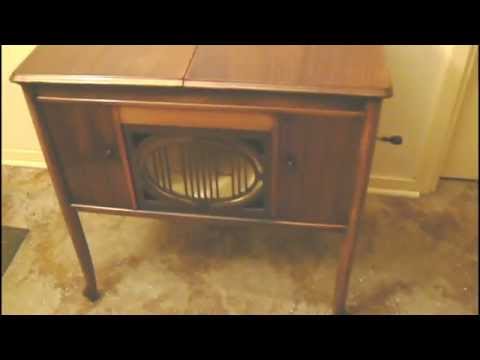
Brunswick pool tables are thought to be among the most finely made and most costly, but knowing whether a table is an authentic Brunswick can be challenging. You have to inspect several elements of the table, many of which are hidden from plain sight and difficult to access, and know what to look for specifically. Brunswick Antique Hand Crank Phonograph Model YO Serial Number 234330 - Fully Working Condition Plays Great! Lot #114 Item: 4b Montgomery, MN. I have a cabinet style brunswick phonograph, model RO, number 259042, with Electrophonic loud and Silvertone soft needles and 'alto' fibre needle clippers. In the wood the numbers 253112 and 259042 are stamped. The cabinet is a little beat up but the phonograph works just fine. The slow - fast dial works and I actually have records that I can play. Dec 14, 2017 Brunswick phonograph serial numbers. Or letter stamped onto it along with the serial number for that actual phonograph. Tags are usually located near the turntable or at the back of the cabinet. Brunswick Phonograph Serial Numbers. Antique phonograph and Victrola identification guide Our not quite comprehensive guide to identification of many Edison, Victor, Columbia and other talking machines and phonographs ca.
The Edison Diamond Disc Record is a type of phonograph record marketed by Thomas A. Edison, Inc. on their Edison Record label from 1912 to 1929. They were named Diamond Discs because the matching Edison Disc Phonograph was fitted with a permanent conical diamond stylus for playing them. Diamond Discs were incompatible with lateral-groove disc record players, e.g. the Victor Victrola, the disposable steel needles of which would damage them while extracting hardly any sound. Uniquely, they are just under 1⁄4 in (6.0 mm; 0.235 in) thick.
Edison had previously made only phonograph cylinders but decided to add a disc format to the product line because of the increasingly dominant market share of the shellac disc records (later called 78s because of their typical rotational speed in revolutions per minute) made by competitors such as the Victor Talking Machine Company. Victor and most other makers recorded and played sound by a lateral or side-to-side motion of the stylus in the record groove, while in the Edison system the motion was vertical or up-and-down, known as vertical recording, as used for cylinder records. An Edison Disc Phonograph is distinguished by the diaphragm of the reproducer being parallel to the surface of the record. The diaphragm of a reproducer used for playing lateral records is at a right angle to the surface.
In the late summer and early fall of 1929 Edison also briefly produced a high-quality series of thin electrically recorded lateral-cut 'Needle Type' disc records for use on standard record players.
Historical background[edit]
A 1918 Diamond Disc Record with Samuel Siegel on mandolin and Marie Caveny on ukulele. | |
| Problems playing this file? See media help. | |
The record industry began in 1889 with some very-small-scale production of professionally recorded wax cylinder records. At first, costly wet-cell-powered, electric-motor-driven machines were needed to play them, and the customer base consisted solely of entrepreneurs with money-making nickel-in-the-slot phonographs in arcades, taverns, and other public places. Soon, some affluent individuals who could afford expensive toys were customers, too. By the late 1890s, relatively inexpensive spring-motor-driven phonographs were available and becoming a fixture in middle-class homes. The record industry boomed. At the same time, the Berliner Gramophone Company was marketing the first crude disc records, which were simpler and cheaper to manufacture, less bulky to store, much less fragile, and could play louder than contemporary wax cylinders, although they were of markedly inferior sound quality. Their quality was soon greatly improved, and by about 1910 the cylinder was clearly losing this early format war. In 1912, Thomas Edison, who had previously made only cylinders, entered the disc market with his Diamond Disc Phonograph system, which was incompatible with other makers' disc records and players.
Brunswick Phonograph Serial Numbers List
Unusual characteristics[edit]
Like cylinder records, the sound in a Diamond Disc's groove was recorded by the vertical method, as variations in the depth of the groove cut. At that time, with the notable exception of Pathé Records, which used yet another incompatible format, a disc's groove was normally of constant depth and modulated laterally, side-to-side. The vertical format demanded a perfectly flat surface for best results, so Edison made his Diamond Discs almost one-quarter of an inch (6 mm) thick. They consisted of a thin coating of a phenolic resin virtually identical to Bakelite on a core of compressed wood flour, later also china clay, lampblack for color, all in a rabbit-hide glue binder.[1] With very rare exceptions, all were about ten inches in diameter, but they used a finer groove pitch (150 threads per inch, or 'TPI') and could play longer than lateral ten-inch records—up to 41⁄2 minutes per side.
Among their advantages over the competition, they were played with a permanent conical diamond stylus, while lateral-cut records were played with a ten-for-a-penny steel needle that quickly wore to fit the groove contour and was meant to be replaced after one use. A feed screw mechanism inside the Phonograph moved the reproducer across the record at the required rate, relieving the groove of that work and thus reducing record wear. This design was in response to the patent held by the Victor Talking Machine Company that states that the groove of the record itself is what propelled the reproducer across the surface of the record via the needle. The playing speed for Diamond Discs was specified at exactly 80 revolutions per minute, at a time when other makers' recording speeds had not been standardized and could be as slow as 70 rpm or even faster than 80 rpm, but were typically somewhere around 76 rpm, leaving users who cared about correct pitch to adjust the playback speed for each record until it sounded right. Above all, there was, and still is, general agreement that the Diamond Disc system produced the clearest, most 'present' sound of any non-electronic disc recording technology.
Although Victor's Victrolas and similar record players could not play Diamond Discs (at best, only very faint sound would be heard, while the crude steel needle seriously damaged the groove) and Edison Diamond Disc Phonographs could not play Victor or other lateral-cut discs, third-party suppliers came up with adapters, such as the Kent adapter, to defeat this incompatibility, but typically with less than optimal sound quality.[2] The Brunswick Ultona, the Sonora, and the expensive 'Duo-Vox' phonograph made by the piano manufacturer Bush and Lane were the only non-Edison machines that came from the factory equipped to play Diamond Discs as well as Victor and other 'needle-type' records, along with Pathé's sapphire ball stylus hill-and-dale format that used a vertical groove that was U-shaped in cross-section. Edison discouraged all such alternatives by cautioning on some of the record sleeves: 'This Re-Creation should not be played on any instrument except the Edison Diamond Disc Phonograph and with the Edison Diamond Disc Reproducer, and we decline responsibility for any damage that may occur to it if this warning is ignored.'[3] The very good reason for such discouragement was that Diamond Disc grooves were too narrow and fragile to propel a soundbox across a record surface, as lateral machines did; Edison's precise mechanical feed system on the Disc Phonograph for its weighted 'floating' reproducer replaced that stress on its records.
Rise and fall[edit]
Diamond Discs enjoyed their greatest commercial success from the mid-1910s to the early 1920s, with sales peaking in 1920.[4] Although they arguably had better audio fidelity, they were more expensive than, and incompatible with, other makers' products and ultimately failed in the marketplace. Not least among the factors contributing to their downfall was Thomas Edison's insistence on imposing his own musical tastes on the catalog. As an elderly man who favored old-fashioned 'heart' songs and had various idiosyncratic preferences about performance practices, he was increasingly out of touch with most of the record-buying public as the Jazz Age of the 1920s got underway. It was not until mid-decade that he reluctantly ceded control to his sons.
In 1926, an attempt at reviving interest in Edison records was made by introducing a long-playing Diamond Disc which still rotated at 80 rpm but tripled the standard groove pitch to 450 threads per inch by using an ultra-fine groove, achieving a playing time of 24 minutes per 10-inch disc (12 on each side) and 40 minutes per 12-inch disc (these were the only 12-inch Diamond Discs ever sold to the public). A special reproducer and modified feed screw mechanism were required to play them. There were problems with skipping, groove wall breakdown, overall low volume (about 40% of that of the regular Diamond Discs), and a failure to exploit the format by releasing a limited number of discs. Only 14 different Edison Long Play discs were issued before they were discontinued.
In August 1927, electrical recording began, making Edison the last major record company to adopt it, over two years after Victor Records, Columbia Records, and Brunswick Records had converted from acoustical recording. Sales continued to drop, however, and although Edison Diamond Discs were available from dealers until the company left the record business in late October 1929, the last vertically cut direct masters were recorded in the early summer of that year. Priority had been redirected to introducing a new line of Edison lateral or so-called Needle Type thin shellac records, compatible with ordinary record players, but although their audio quality was excellent this concession to commercial reality came too late to prevent the demise of the Edison Phonograph and Records Division just one day before the 1929 stock market crash.[5]
See also[edit]
Serial Numbers Microsoft
References[edit]
- ^'Tim Gracyk's Phonographs, Singers, and Old Records – Edison Diamond Discs: 1912–1929'. Gracyk.com. Retrieved 18 September 2014.
- ^'Very rare reproducer made for Victrola machines to play Edison DD records'. Pat.kagi.us. Archived from the original on 24 August 2011. Retrieved 18 September 2014.
- ^'Tim Gracyk's Phonographs, Singers, and Old Records – Brunswick Phonographs and Records'. Gracyk.com. Retrieved 18 September 2014.
- ^'EDISON DIAMOND DISC MANUFACTURING PROCESSES - By Paul B. Kasakove / THOMAS A. EDISON, INC'. Mainspringpress.com. Archived from the original on 15 September 2015. Retrieved 18 September 2014.
- ^ Recent comparisons of late popular-series Diamond Discs with the few released 'Needle Type' lateral-cut versions of the same titles indicate that Edison had been splitting their electrical signal during recording to both vertical and lateral lathes since early 1929, as the performances time out identically - the last Diamond Discs are an average of over a minute shorter than 1927-28 releases, fitting the recording time capacity of the ten-inch diameter lateral issues - and have near-identical frequency ranges.
As collectors, we often receive questions from people who have just inherited or purchased an antique phonograph. We hope the following general guidelines will be helpful to new owners. NOTE: You may want to open our Glossary of Terminology in a separate window and refer to it as you read the following:
General Guidelines for Cylinder Record Machines and 78 rpm Disc Machines:
Your antique phonograph is probably powered by a spring motor. Unless it has recently been serviced, the mainspring grease and lighter gear lubricants have probably dried out. Minimally, all bearings and governor pads should be lubricated with sewing machine oil or other good quality lubricant. (Paraffin-based products such as 3-In-One oil may become gummy and are not recommended). If a “thumping” or “chugging” sound is heard as the motor runs, it means the mainspring grease has become hardened or thickened in spots. Sometimes the repeated act of winding the mainsprings and allowing them to run down will redistribute the mainspring grease and the problem will resolve itself. Occasionally the problem is bad enough that the mainspring(s) will need to be disassembled, cleaned, regreased, and reassembled. This is a job best left to the experienced. In all cases, know your limits (we all have them) and seek advice or assistance with jobs that are beyond your present skill set. Important Note: a phonograph spring motor should never be disassembled until after the mainsprings have been allowed to completely run down!
Once you’re confident that your spring motor can be used without damaging it, winding the mainsprings is necessary. Newcomers to antique phonographs will often hesitate to wind the mainsprings too much. This is fine, but the mainsprings must be wound enough to provide sufficient power. Minimally, 25-30 revolutions of the crank should be enough to play one record. Motors with 2, 3 or 4 mainsprings can be wound 60, 90, or over 100 revolutions, although care should always be taken to avoid over-winding the mainspring. As the springs become fully wound, the operator will feel increasing resistance to cranking, followed by complete resistance. At that point, winding should stop. Except for small spring motors with single mainsprings, it shouldn’t be necessary to completely wind the motor. However, doing so should cause no damage as long as the mainspring is not forced beyond a fully wound state. One last word about mainsprings: these motors are in many cases over a century old. Mainsprings can and do break. New replacements are available at nominal cost, but their installation should be attempted only by a knowledgeable repair person. With yards of mainspring coiled tightly into a donut-size spring barrel, things can happen fast if it’s not properly controlled during removal – – sometimes resulting in injury. Let an expert handle it.
Antique phonographs are often housed in attractive wooden cabinets. Sometimes enthusiastic new owners, in a well-meaning attempt to improve the appearance of the cabinet, will apply tung oil, varnish, polyurethane, or other finishes to the cabinet. Unfortunately, this often results in regret later on when the owner discovers that they applied a finish that was inappropriate for that particular cabinet, or that a rare original finish was accidently ruined. Before doing anything to an antique phonograph’s cabinet beyond gentle cleaning and lemon or orange oil, consult an authority.
Acoustic (that is, non-electric) phonographs depend almost exclusively on a horn to shape and direct the sound. Early phonographs relied on external horns. In 1906, the first internal horn machines (where the horn was concealed inside the cabinet) became widely available, and by 1912 these were outselling the external horn models.
Sound reaches the horn in a surprisingly simple manner. The bumps and wiggles of a recording are set like stone in the groove of a disc or cylinder record. (These grooves are easily seen on the outside surface of a cylinder and on one or both sides of a disc.) When the steel needle of a disc machine’s sound box or the jewel stylus of a cylinder machine’s reproducer glides over these undulations, the needle/stylus is vibrated. The needle/stylus is attached to a diaphragm – – much like the head of a drum. The diaphragm, now vibrating in sympathy with the needle/stylus, produces sound. But at this point the sound is thin and “tinny.” If the sound waves are allowed to travel into a horn (sometimes through a hollow tone arm; other times directly into the horn), the sound is directed and allowed to expand its frequency range – especially in the lower end – and also in volume (think of a cheerleader’s megaphone). In general, a larger horn will make a record sound better.
Pointers for 78 rpm Disc Record Machines:
1) First and foremost, steel needles play laterally-recorded discs and are designed to be used once only – then thrown away. They’re readily available today, and are inexpensive. Remove and throw away any steel needle that is mounted in the sound box. Likewise throw away steel needles that are lying loose in the machine or in a “discard” container (these usually have a round hole in the lid to receive used needles). Use steel needles only from a paper envelope or metal container that contains shiny (not rusty) steel needles. By using only new steel needles and changing them with each record, your antique recordings will sound better and last much longer. (By the way, steel needles are meant only for 78 rpm shellac-based records. They will destroy vinyl records in short order, as well as thick Edison discs.) Some disc phonographs (such as Pathe) were designed to play vertically-recorded discs using a sapphire ball stylus.
If your machine’s sound box has a metal shank carrying a tiny round stylus at the tip, DO NOT throw it away, but protect it from damage. It cannot be used to play common records such as Victor, Columbia, etc., but can play Pathe, Rex, Phono-Cut, and other vertically-recorded discs (except Edison).
If you own an Edison Disc Phonograph, your stylus is a permanent diamond. It can be used to play only Edison records of ¼” thickness. Unless it has been damaged, it should need no maintenance. To determine if your Edison stylus is good, gently lower it into the run-out area just outside the label and carefully examine that area under strong light. If the surface remains mirror-smooth, your stylus is probably fine. But if a tiny line has been inscribed by the stylus, it needs to be replaced. Do not play your records with it.
2) Cleanliness will contribute to your records’ lifespan. If your disc records have been stored in albums or paper sleeves inside the phonograph, and look clean and shiny, they can probably be played with little or no harm (although many serious collectors never play new acquisitions until after carefully cleaning them). If there is visible dirt or other foreign matter in the record grooves, the record should be cleaned. Collectors argue over the best method of cleaning 78 rpm discs, but most use dishwashing detergent in lukewarm water with a soft brush or washcloth. (Note: Do not use water on Edison disc records. Rubbing alcohol is the best method for cleaning these.) A circular motion following the grooves is important, as well as a good rinsing and thorough drying. Professional archivists use specially prepared washing agents that are also available to collectors. Regardless of one’s approach to cleaning 78 rpm records, everyone agrees that a dirty record should be cleaned before being played.
3) When the steel needle in the sound box is lowered to the record, it should make contact at approximately a 60-degree angle. Be sure the sound box is properly positioned on the tone arm to insure this angle of contact. Also, the needle should point in the direction of the record’s travel; always being pulled through the groove (never being pointed against the record’s direction of travel).
The steel needle should always contact the record at an angle.
(Note: this is an unrestored sound box. For optimal playback and minimal record wear, your sound box should be rebuilt with new gaskets, rear flange, and proper adjustment. See #4 below.)
Proper tone arm position. The needle should point in the direction of the record’s travel.
Improper tone arm position. The needle will dig into the groove, quickly wearing out the record.
4) Most antique disc phonograph sound boxes are equipped with mica diaphragms. Over the years, the rubber gaskets that suspend the diaphragm have probably dried out. This will cause the machine to play with buzzing and generally poor fidelity. In 99 cases out of 100, a newly-acquired antique phonograph will need its sound box rebuilt. Although not a difficult job, it is a delicate operation and should be performed by an experienced person.
5) Some later sound boxes (notably the Victor Orthophonic) use stamped aluminum diaphragms. Rebuilding these sound boxes is especially tricky, and should be attempted only by an experienced person.
6) Hold your disc records properly!
Hold disc records by their edges.
Pointers for Cylinder Record Machines:
1) Do not attempt to play a cylinder record until you are certain you are playing it with the proper reproducer! From the 1890s until 1929, cylinder records were made from different materials, had grooves of different sizes, and played at different durations (2 minute or 4 minute). A variety of reproducers (employing various sized styli) were made to play these various cylinder records, and playing a record with the wrong reproducer can destroy it with a single play. Below are photos of commonly-found cylinder records and the proper reproducers designed to play them. Note that the phonograph must be capable of playing the same record as the reproducer! Some machines play records of 2 minute duration only; others can play records of both 2 and 4 minute duration by means of a gear shifting mechanism. The last models were designed to play cylinder records of only 4 minute duration.
Note: Cylinders with titles engraved on the ends are slid onto the mandrel blank end first; title end last. Brown wax and early black wax cylinders (without titles on the rims) are slid onto the mandrel beveled end first, flat end last. If you try to put it in backwards, the record will jam and if made of wax, it will break. In all cases, handle the cylinder carefully and never force it on the mandrel.
Brown Wax 2 Minute: (Safely played with these reproducers: Edison Automatic, B, D; Graphophone floating types.)
Brown wax cylinder records were made in a variety of shades, and are softer than cylinder records made from 1902 onward.
The Edison Automatic Reproducer has a ball stylus and was supplied with most Edison Phonographs prior to 1902.
Columbia Graphophones were equipped with a variety of “floating” reproducers until 1904 – all employing ball styli.

Another commonly seen Columbia Graphophone “floating” reproducer.
Black Wax 2 Minute: (Safely played with Edison Automatic, B, C, D, K*, M*, O*, S*; Graphophone floating types, Lyric.)
The earliest examples of the harder black 2 minute cylinders lacked the title engraved on the rim, as seen on the right. By 1904, titles were engraved on the rim, as seen on the left.
The Model C Reproducer is the 2 minute type most commonly found with Edison Phonographs. The tailweight is almost always marked “MODEL C.”

The Model O Reproducer was designed to play both 2 and 4 minute cylinders by turning the knob at the front.
From late 1904 until late 1908, most Graphophones were equipped with a “Lyric” reproducer to play 2 minute cylinders.
Celluloid 2 Minute: (Safely played with Edison Automatic, B, C, K*, M*, O*, S*; Graphophone floating types, Lyric.)
The most common of the 2 minute celluloid cylinders is the Indestructible (on the left). To the right is a U.S. Everlasting – another commonly found brand.
Black Wax 4 Minute: (Safely played with Edison H, J, L, M*, N, O*, R, S*.)
The Edison 4 minute wax cylinder was called the “Amberol,” and manufactured from 1908-1912. It is quite fragile and highly susceptible to rapid changes in temperature.
The Edison Model C (2 minute) and Model H (4 minute) Reproducers are quite similar. The green dye seen on the Model H was apparently applied only to the earliest of these in order to prevent accidental use of it on 2 minute cylinders. Fortunately, the tailweights of these models are engraved with the type.
The Edison Model K Reproducer is a “Combination Type,” having both 2 minute and 4 minute styli. It’s important to play records with the proper stylus. Other Edison Reproducers with both types of styli are the M, O, and S.
Celluloid 4 Minute: (Safely played with Edison H, J, L, M*, N, O*, R, S*, Diamond A, Diamond B, Diamond C, Graphophone 4m Lyric.)
4 minute celluloid cylinders are found in a variety of shades. Those on the left are Indestructibles, manufactured until 1922. Those on the right are Edison Blue Amberols, manufactured until 1929.
The Edison Diamond A Reproducer was designed for 4 minute celluloid records only. These models were not marked.
The Edison Diamond B Reproducer was designed for 4 minute celluloid records only. These models were not marked.
The Edison Diamond C Reproducer was designed for 4 minute celluloid records only. These models were not marked. Later versions of this reproducer were painted black, and these are found in the Amberola 30, 50, and 75.
2) Unlike disc playing phonographs, cylinder machine reproducers use permanent styli – – usually a sapphire or diamond. Unless the stylus is broken or worn out, the reproducer should be capable of playing a record. Like disc sound boxes, cylinder reproducers employ rubber gaskets to seat the diaphragm, and these dry out over time. This will cause the machine to play with buzzing and generally poor fidelity. In 99 cases out of 100, a newly-acquired antique phonograph should have its reproducer rebuilt. Although not a difficult job, it is a delicate operation and should be performed by an experienced person.
3) Some cylinder machines are capable of playing both 2 minute and 4 minute records. It’s important to set the machine’s gearing in the proper position, and make sure the proper reproducer is in place, or a combination reproducer is set for the same type of record. All 4 minute cylinders except Edison Blue Amberols will have “4M” engraved on the title rim. Only with rare exceptions are 2 minute records marked with the duration “2M”, if your record is black or brown (not blue) and does not say”4M”, it is most likely a 2 minute record.
4) Always keep your cylinder reproducer in the upper position when not playing a record. Sliding a cylinder record onto the mandrel while the reproducer is in the lower (playing) position can break off the stylus – – an expensive repair.
This reproducer carriage is in the upper position. By pulling the knurled button outward and lowering the carriage, the reproducer is put into playing position.
5) Cleanliness will contribute to your cylinder records’ lifespan. If your cylinder records have been stored in a clean environment and appear clean and shiny, they can probably be played with little or no harm (although many serious collectors never play new acquisitions until after carefully cleaning them). If there is visible dirt or other foreign matter in the record grooves, the record should be cleaned. Generally the best way to clean mildly dusty or soiled brown wax or black wax cylinders is to gently wipe them with a clean cotton cloth in the direction of the grooves. This method works well on celluloid cylinders as well, although if necessary a damp sponge can be used to more thoroughly clean the record grooves, followed by careful drying with a soft cloth. Note: Do not allow water to contact the plaster cores of Edison Blue Amberol records or the paper cores of 2/4 minute Indestructible or Everlasting cylinder records. In the case of very dirty wax cylinders, they may be immersed in lukewarm water and dish detergent then gently cleaned with a soft clean cotton or terry cloth. Allow to air dry for at least 30 minutes. Note: Edison 4 minute wax cylinders are very sensitive to sudden changes in temperature, and will spontaneously crack when exposed to seemingly negligible temperature changes. Professional archivists use specially prepared washing agents that are also available to collectors. Regardless of one’s approach to cleaning cylinder records, everyone agrees that a dirty record should be cleaned before being played.
5) Moldy or mildewed cylinders are of little or no value. The mold, being a plant material, has consumed some of the wax compound of which the record is made. This material is gone forever and no amount of cleaning can ever restore it. Brown wax cylinders can be shaved down and re-recorded, but the black wax cylinders are beyond redemption. Worse yet, cylinders with active mold spores can contaminate mold-free cylinders over time. Moldy cylinders should be either segregated from non-moldy examples, or thrown away. Celluloid cylinders do not become moldy, and have survived in greater numbers than wax cylinders.
Free Serial Numbers
6) Hold your cylinder records properly!
Cylinder records should be handled like this.
Brunswick Phonograph Serial Numbers Diagram
There’s a lot to learn about antique phonographs. Some of us have been studying them for 50 years and we’re still learning! Enjoy the process of discovery, and don’t be afraid to ask questions. For further information, go to info@antiquephono.org .
Serial Numbers Cracks
*When the reproducer is set to the appropriate stylus; 2 minute or 4 minute.