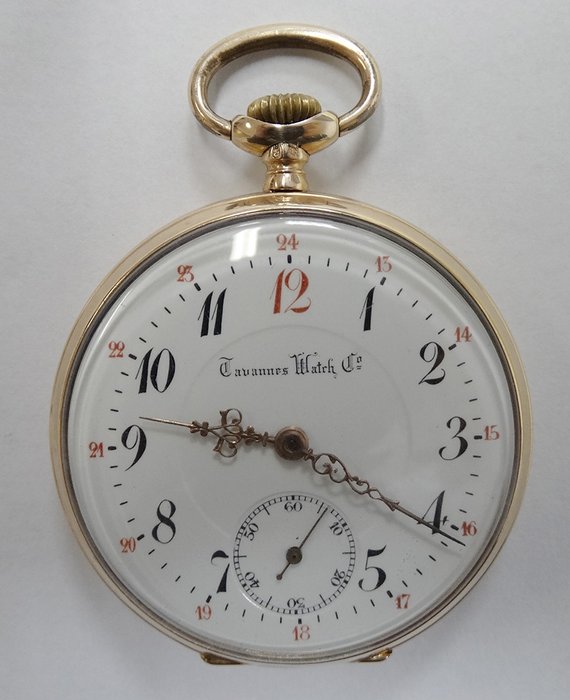
Jul 22, 2017 Second Time Around Watch Company specializes in the purchase, sale and repair/service of vintage watches and antique watches plus the repair/service of modern watches. Tavannes Watch Co, www.tavanneswatches.com, www.tavannes-watch.com, www.tavanneswatch.com Buy your watch online, Tavannes Watches, Yellow Rose Pink White Gold Watch. Make Offer - Antique TAVANNES Watch Co Open Face Yellow Gold Pocket Watch 7 Jewels - Running DOUBLE HUNTER Victorian TAVANNES Antique Swiss Made SOLID SILVER Pocket Watch $400.00.
Do you know the value of your vintage pocket watch?
Perhaps you have inherited an antique timepiece, passed through your family for generations? Or perhaps you’ve found an old pocket watch at an antique fair and are curious about its value?
Antique pocket watches can bring in some serious money, but determining their value can be difficult. So, what exactly should you be looking out for? Here are the top 6 things to consider when determining the value of your pocket watch.
Brand
Tavannes Watch Company Serial Numbers For Today
Most watches will have the brand name written somewhere on the design, whether on the casing or the watch face itself. Double check your pocket watch for this information, alongside any further identification that may be useful, such as serial numbers or manufacturers numbers.
By researching this information, you may be able to get an idea of the era your watch is from, and prices of similar pieces. Look out for any big names such as Omega, Longines or Elgin, as these will hold an instantly higher value.
Material
It goes without saying that a quality gold or silver pocket watch will carry a greater value than a non-precious metal, based on the material alone. Check the casing of your watch: is the material high quality? Are they any additional gems or embellishments? Premium materials and precious metals, gems or stones will all add to the overall value of your timepiece.
Movement
However, don’t solely judge a watch by its cover – it really is what’s inside that counts! The movement of your pocket watch can actually indicate a lot more than the casing when it comes to quality and value, with a complicated movement generally always being worth more. Quite often you will need to remove the movement from the watch in order to examine it. The absolute utmost care should be taken when doing this – never force the movement out of a watch. If you don’t have experience handling timepieces in this manner, always seek professional help.
Adjustments
Higher quality (and therefore more valuable) pocket watches tend to have much higher attention to detail, so take a look at the adjustments, gears and jewels inside your watch. These make up the calibrations inside your pocket watch, with a higher amount indicating a higher quality timepiece. As a general rule of thumb, the more jewels, gears and adjustments inside your pocket watch, the more value it holds.
Condition
The condition of your pocket watch, both internally and externally, is a huge factor in determining the value that it holds today. Is your watch in a good, working condition? Wind the watch: are the hands moving smoothly, and is the time showing accurately? Internally, it is important that the movement and adjustments are all working as they should be for the highest possible value. Again, if you are unsure about these factors, seek professional advice.
Externally, is the casing and design of your pocket watch in good physical condition? Has there been any water damage, or does your watch display signs of rust? Are there cracks or dents in the watch casing? Damage, both to the watch aesthetics and inner workings, will instantly lower the value of your timepiece. Any antique pocket watches in impeccable condition are guaranteed to hold a much higher value today.
Professional opinions
Finally – and we cannot stress this enough! – if you are looking to sell your vintage or antique pocket watch, always get a professional opinion. A professional will instantly know what to look for in your pocket watch and will be equipped to handle older, delicate watches without causing damage. While the above factors can all help indicate the value of a pocket watch, you will not know for sure until it is valued by an expert.
If you’re looking for a new pocket watch to add to your collection, be sure to explore the full range at Greenwich Pocket Watch. From sleek open face pocket watches to half double hunter pocket watch designs, you’re sure to discover your new special occasion go-to.
While we can't make you into an antique watch expert with just a few web pages, we hope we can share a little of our knowledge in order to help you learn more about your vintage or antique watch. We've tried to provide answers to some of the more common questions about the proper care and handling of a vintage watch, in order to help you learn more about this fascinating area of American history.
Two Parts: Watch Case and Watch Movement
There are two distinct major 'components' to most pocket watches: The watch case and the watch movement. The movement is the inner 'works'... the actual time-keeping mechanism of the watch. The watch case is the outer protective cover, including the crystal that covers the dial. The case also includes (or accommodates) the winding stem and crown.
What's important to know about antique American watches is that cases and movements were usually made by different companies. There were watch manufacturers and there were case manufacturers. American pocket watches used a system of (relatively) standard watch sizes, so it was possible for a customer to select the watch movement they wished to purchase, and then select a case to hold it. Cases could be made of a wide variety of metals: gold, sterling silver, coin silver (made from melted US coinage), nickel, and plated brass.
Left: Watch case with crystal; Right: Watch movement with dial and hands
Open Face or Hunter Case?
This is one of the easiest questions to answer! If there is a metal cover over the dial of the watch (it's called the 'dial' not the 'face') then it's a hunter-case watch. If there is no metal cover over the dial, then it's an 'open face' watch. An open-face watch just has a 'crystal' over the dial (usually made of mineral glass). If there is neither a metal cover nor a crystal, then it's likely that something's missing. Sometimes the bezel (the round metal ring that retains the crystal) is lost, which makes it impossible to replace the missing glass (see this article for more information on vintage pocket watch bezels).
Hunter-cased watch has a metal lid over the dial of the watch which closes to protect the crystal, hands and dial.
Left: Open face watch with bezel and crystal installed, Right: Same watch with bezel and crystal removed
Demi-Hunter Case
A minor variation on the hunter case is the demi-hunter style, which has a small 'window' in the front cover through which the hands (or part of the hands) may be viewed. This is sometimes complemented by an enamel inlaid 'dial' in the lid in the case, so that one can easily tell the time without needing to open the watch. Thus the demi-hunter provided the convenience of an open-face watch with the protection of a hunter-cased watch. Demi-hunter cases are much more common on watches of European origin; we don't see very many American watches in demi-hunter cases.
Swiss demi-hunter case with inlaid enamel dial in the case-lid, by Thos. Russell

Side-Winders
Note that in the photos above, the winding stem is at the 3:00 position on the hunter-cased and demi-hunter-cased watches, and in the 12:00 position on the open-face watch. This is by design. Movements were made either for a hunter-case or for an open-face case. The primary difference between a hunter-case movement and an open-face movement is the relative positioning of the winding arbor and the seconds bit, and the positions of the dial-feet.
When a hunter-case movement and dial are mounted in an open-face case, it is called a 'side-winder' because the winding stem will now be at the 3:00 position instead of the 'normal' 12:00 position. While this doesn't present any real operational difficulties, a side-winder is generally not considered to be a 'correct' matching of movement and case. Note that it's only called a side-winder if it is a hunter-case movement in an open-face case. We sometimes hear people calling their hunter-cased watches side-winders because the winding stem is at 3:00... but they should only be called side-winders if in an open-face case.

For more information, please see our article on side-winder and side-seconds watches.
Tavannes Watch Company Serial Numbers Value
Pair-Cased Watches
You're probably not going to run into very many of this case type, unless you have a very old watch that's been handed down to you. In the early to mid-18th century, it was common for watches to be housed in 'pair cases'. A pair-cased watch has an inner case which holds the actual movement of the watch (often a verge fusee), and an outer case which enclosed and protected the inner case. Since the inner case couldn't be made dust-proof because of the key-holes for winding and/or setting, an outer case would provide additional protection from dust and dirt. There were even some triple-cased watches made during the same period! Early pair-cased verge fusee watches were often ornately decorated with pierced and chased gold-work as seen in the photos below.
Tavannes Watch Company Serial Numbers Lookup
Pair-cased 18th century verge fusee by Ja. Thomson, London