The theory aspect of the Class A license test for Georgia comes first; this then qualifies you to begin taking practical driving lessons to get you ready for the driving part of the GA DMV test. The CDL general knowledge DMV permit test comes first so that you are fully armed with all the basic commercial driving information you will need to. Georgia Commercial Driver's License. This CDL practice test is a great place to start if you’re after the GA Combination Vehicles endorsement. Each of the 25 questions is based on the official 2020 CDL manual. The test is designed to prepare you for the Combination Vehicles portion of your 2020 Commercial Driver’s License exam.
It is illegal for a person 21 years of age or older to drive with a minimum blood alcohol concentration (BAC) of:
Temporary signs used in construction and maintenance work areas:
Have an orange background with black writing. |
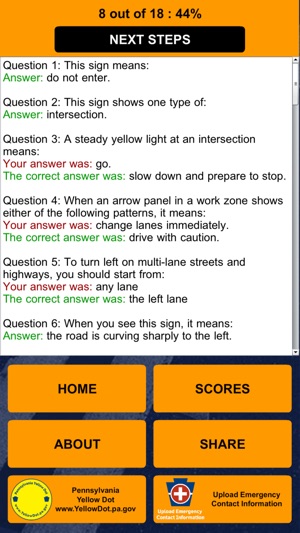
This sign means:
Ga Class F License Practice Test Florida
This sign is a:
On a multilane road, a dashed yellow line next to a solid yellow line means:

Passing is permitted from both directions. |
Passing is permitted only from the direction next to the dashed line. |
What does this road sign indicate?
School zone ahead |
To be able to turn quickly, your hands must be:

Next to each other on the top of the steering wheel. |
You may pass on the right of another vehicle:
When traveling either on a multilane highway or on a street with an available turning lane. |
Only when traveling on a multilane highway with two or more lanes of traffic traveling in the same direction. |
Only when the other vehicle is making or is about to make a left turn and a lane is provided for you to pass on the right. |
Georgia Class E License Test
Class E License Ga
O.C.G.A. 40-5-23 (2010)
40-5-23. Classes of licenses
(a) The department upon issuing a driver's license shall indicate thereon the type or general class of vehicles that the licensee may drive.
(b) Subject to this chapter, the commissioner shall establish by rules and regulations such qualifications, including but not limited to, training, experience, or educational prerequisites, as he or she believes are necessary for the safe operation of the various types, sizes, or combinations of vehicles and shall appropriately examine each applicant to determine his or her qualification according to the type or general class of license applied for.
(c) The noncommercial classes of motor vehicles for which operators may be licensed shall be as follows:
Class C -- Any single vehicle with a gross vehicle weight rating not in excess of 26,000 pounds, any such vehicle towing a vehicle with a gross vehicle weight rating not in excess of 10,000 pounds, any such vehicle towing a vehicle with a gross vehicle weight rating in excess of 10,000 pounds, provided that the combination of vehicles has a gross combined vehicle weight rating not in excess of 26,000 pounds, and any self-propelled or towed vehicle that is equipped to serve as temporary living quarters for recreational, camping, or travel purposes and is used solely as a family or personal conveyance; except that any combination of vehicles with a gross vehicle weight rating not in excess of 26,000 pounds may be operated under such class of license if such combination of vehicles are controlled and operated by a farmer, used to transport agricultural products, livestock, farm machinery, or farm supplies to or from a farm, and are not used in the operations of a common or contract carrier;
Class D -- Provisional license applicable to noncommercial Class C vehicles for which an applicant desires a driver's license but is not presently licensed to drive;
Class E -- Any combination of vehicles with a gross vehicle weight rating of 26,001 pounds or more, provided the gross vehicle weight rating of the vehicle or vehicles being towed is in excess of 10,000 pounds, and all vehicles included within Class F and Class C;
Class F -- Any single vehicle with a gross vehicle weight rating of 26,001 pounds or more, any such vehicle towing a vehicle with a gross vehicle weight rating not in excess of 10,000 pounds, and all vehicles included within Class C;
Class M -- Motorcycles, motor driven cycles, and three-wheeled motorcycles;
Class P -- Instruction permit applicable to all types of vehicles for which an applicant desires a driver's license but is not presently licensed to drive.
Any applicant for a Class E or Class F license must possess a valid Georgia driver's license for Class C vehicles. A license issued pursuant to this Code section shall not be a commercial driver's license.
40-5-23. Classes of licenses
(a) The department upon issuing a driver's license shall indicate thereon the type or general class of vehicles that the licensee may drive.
(b) Subject to this chapter, the commissioner shall establish by rules and regulations such qualifications, including but not limited to, training, experience, or educational prerequisites, as he or she believes are necessary for the safe operation of the various types, sizes, or combinations of vehicles and shall appropriately examine each applicant to determine his or her qualification according to the type or general class of license applied for.
(c) The noncommercial classes of motor vehicles for which operators may be licensed shall be as follows:
Class C -- Any single vehicle with a gross vehicle weight rating not in excess of 26,000 pounds, any such vehicle towing a vehicle with a gross vehicle weight rating not in excess of 10,000 pounds, any such vehicle towing a vehicle with a gross vehicle weight rating in excess of 10,000 pounds, provided that the combination of vehicles has a gross combined vehicle weight rating not in excess of 26,000 pounds, and any self-propelled or towed vehicle that is equipped to serve as temporary living quarters for recreational, camping, or travel purposes and is used solely as a family or personal conveyance; except that any combination of vehicles with a gross vehicle weight rating not in excess of 26,000 pounds may be operated under such class of license if such combination of vehicles are controlled and operated by a farmer, used to transport agricultural products, livestock, farm machinery, or farm supplies to or from a farm, and are not used in the operations of a common or contract carrier;
Class D -- Provisional license applicable to noncommercial Class C vehicles for which an applicant desires a driver's license but is not presently licensed to drive;
Class E -- Any combination of vehicles with a gross vehicle weight rating of 26,001 pounds or more, provided the gross vehicle weight rating of the vehicle or vehicles being towed is in excess of 10,000 pounds, and all vehicles included within Class F and Class C;
Class F -- Any single vehicle with a gross vehicle weight rating of 26,001 pounds or more, any such vehicle towing a vehicle with a gross vehicle weight rating not in excess of 10,000 pounds, and all vehicles included within Class C;
Class M -- Motorcycles, motor driven cycles, and three-wheeled motorcycles;
Class P -- Instruction permit applicable to all types of vehicles for which an applicant desires a driver's license but is not presently licensed to drive.
Any applicant for a Class E or Class F license must possess a valid Georgia driver's license for Class C vehicles. A license issued pursuant to this Code section shall not be a commercial driver's license.